

People may travel out of duty and consider it a necessary evil, or enjoy it as a form of recreation, but at the end of the day, travellers want to return home. Distance makes the heart grow fonder and the experience of unfamiliarity makes the sense of being at home all the more welcome. By contrast, Franz Liszt was not after such harmony—not in the classical sense: more than a mere activity, travelling was a defining element of his identity. During his early years as a virtuoso, he gave more than a thousand concerts in hundreds of towns and cities, covering hundreds of thousands of kilometres ‘from Glasgow to Constantinople, and from Lisbon to Moscow.’ On average, he performed every three days, and was always on the move, travelling mostly by stagecoach or boat, and less often by train, with a silent practice piano as his constant travelling companion. Packing up and being jolted about on long journeys were a constant part of his daily life, so it is fair to ask: where was the home that balanced all this out for him?
The journey of the virtuoso pianist, who became a ‘rock star’ at a young age, started in the village of Doborján, whence he set out to give his first concert in Sopron—a decisive milestone—at the age of nine. Shortly afterwards, the child prodigy was already being celebrated in Vienna, where he was mentored by Czerny. Before long, he moved on and established himself in Paris. Although he wasn’t admitted to the Conservatoire, it was here that he became a fully fledged artist. His taste was refined in the salons of the French capital, in the company of the era’s most prominent musicians, writers, poets and painters, including Victor Hugo, Lamartine, Chopin and Berlioz. Liszt’s permanent residence soon changed once again, as his personality was enriched by the experiences of his travels through Switzerland and Italy with his lover, Countess Marie d’Agoult. This marked the beginning of a new chapter for him not only as a private individual but also as a composer: it shaped his aesthetic views on nature, literature and the fine arts. The title of Years of Pilgrimage (Années de pèlerinage), the piano cycle he composed at the time, alludes to the composer’s outlook: instead of touring Europe as a tourist, he was a pilgrim for whom travel was a form of cultural enrichment and spiritual growth. The pieces in the Swiss volume—from walks along the shores of Lake Wallenstadt to the ringing of the bells in Geneva—translate the experience of nature into music, while the Italian year already reveals a different world, with the piano works informed by Raphael’s paintings, Michelangelo’s sculptures, Petrarch’s poetry and Dante’s visions.
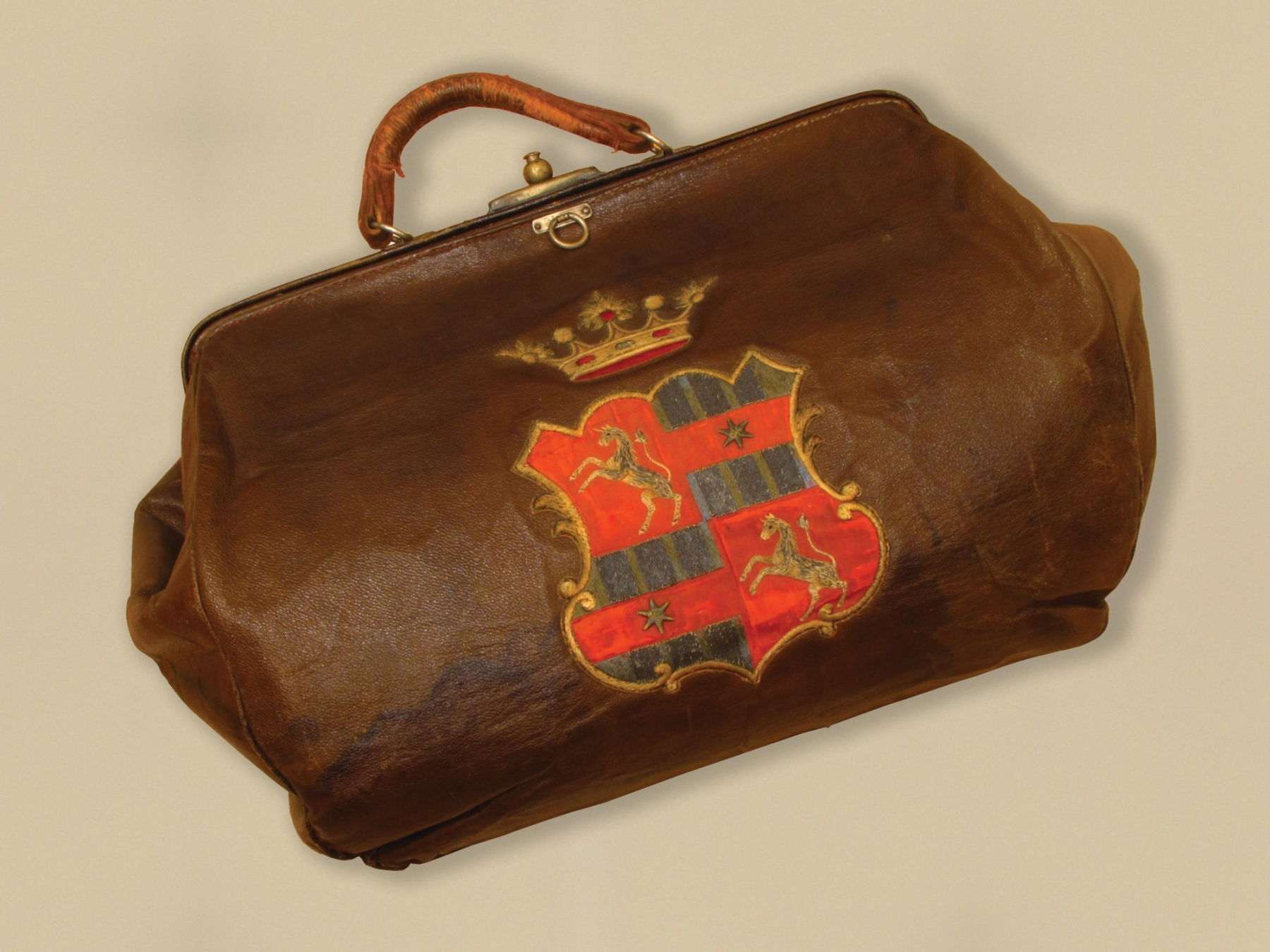 Liszt's travelling bag / Source: Franz Liszt Memorial Museum
However, his ‘pilgrimage’ with Marie did not last forever; their paths parted, and Liszt soon found himself in Weimar, exchanging the persona of the piano virtuoso for that of the conductor, composer and mentor of young talent. Here, he relied on Carolyne von Sayn-Wittgenstein for the warmth of a home. His stable position as a conductor and Carolyne’s intellectual and emotional support provided him with a secure environment that fostered the birth of his symphonic poems and other works. However, when the couple’s marriage hopes had been definitively dashed, the composer took off to Rome, entered the priesthood and moved into a monastery, next to the House of God. He divided his final decades between Weimar, Rome and Budapest, in what he called a ‘three-pronged life.’ He fulfilled three different roles in the three cities: that of the composer in Weimar, the abbot in Rome and the teacher in Budapest.
Liszt lived across Europe, yet he always maintained a special bond with Hungary. Debates continue to this day about the nationality of the virtuoso pianist, given that he was born in a place outside of present-day Hungary, spent most of his life elsewhere, and never learnt Hungarian, which wasn’t his mother tongue. It is then only reasonable to ask why we still consider Liszt to be Hungarian. The answer is, very simply, that the composer himself always identified as a Hungarian. In 1873, in a letter he wrote to his friend Antal Augusz about the establishment of the Academy of Music, he wrote: ‘Allow me, despite my regrettable ignorance of the Hungarian language, to remain Hungarian in my heart and in my feelings from birth to the grave, and accordingly seek to be a dedicated promoter of the cause of Hungarian musical culture.’ Liszt, therefore, saw Hungarian identity not so much as a question of language or a permanent place of residence but as that of a consciously embraced cultural and moral community.
It was this deep attachment that made Budapest an important setting for the final phase of his life. He played a pivotal role in the establishment of the Royal Hungarian Academy of Music, taught students free of charge, and truly placed his knowledge, connections and international standing in the service of Hungarian musical life. His sense of cultural mission is evidenced by his engagement with Hungarian music, particularly the verbunkos, as well as such works as the Hungarian Rhapsodies, the symphonic poem Hungaria and the Coronation Mass. The subject of Hungarian identity was a recurring motif throughout his life.
Could Hungary, then, have been the home of the globetrotting Liszt? After all, every path led here. The reality, however, is more complex than that. In his heart, Hungary was his homeland and place of birth; in a physical sense, however, this was not so obvious. Always moving, being on concert tours or moving house, he may well have found a sense of home not so much in being able to return to the same place as in the very act of travelling; for in this way of life, constancy was embodied in constant change. For him, home was perhaps not a single place, but a spiritual space instead, in which European culture became a unified whole and on whose paths he was an eternal ‘pilgrim.’
The article was originally published in the 2026 edition of Liszt Fest Magazine.
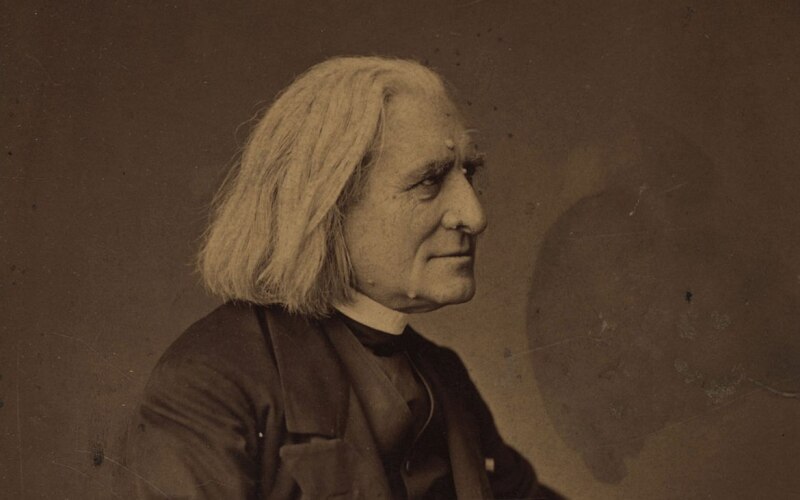
Lead photo: Franz Liszt (1875) / Source: Ferenc Kozmata | Franz Liszt Memorial Museum