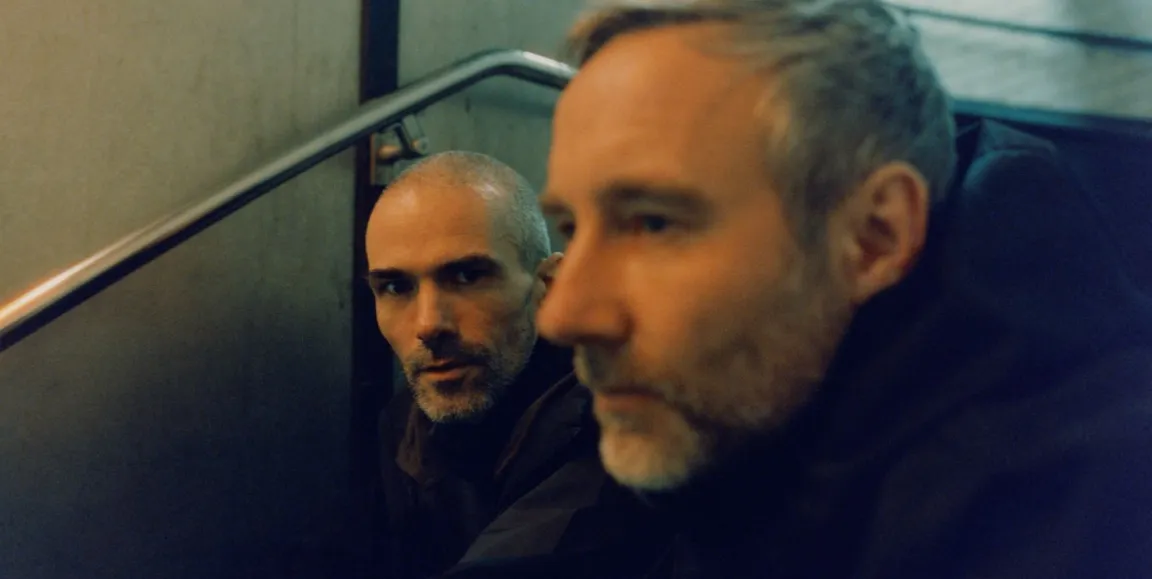


One of the leading acts on the fringe of the electronic music scene is finally returning to Hungary after ten years, a cause for celebration not only for their dedicated local fanbase but for virtually everyone else open to unconventional musical experiences. Read on to see why the duo of Sean Booth and Rob Brown are unmissable, and why you can be sure of a unique experience at their Budapest concert.
When the legendary Warp Records launched its Artificial Intelligence album series in 1992, no one could have known that it would become one of the most important platforms for the revival of electronic music. The label sought to move away slightly from rave and club culture and present music intended for concentrated home listening and active engagement. The first releases included works by F.U.S.E. and Aphex Twin, and in 1993, Incunabula, the debut album by Sean Booth and Rob Brown, who were based in Manchester. From this point on, the name of Autechre would become synonymous with the masterful pushing of the boundaries of electronic music. More than three decades after their formation, the duo still stand in a class of their own without ever repeating themselves; Autechre’s body of work has become so influential not only because of the duo’s exceptionally coherent discography, but also because every single one of their releases and live performances points to the astonishing wealth of possibilities inherent in electronic music.
Booth and Brown met on the Manchester graffiti scene in the late 1980s. Their shared interest soon led them towards hip-hop, electro and techno, and accordingly they produced their first tracks using a few well-tried samplers and drum machines. Their 1993 debut album and Amber, released a year later, can still be relatively easily classified as early IDM (Intelligent Dance Music, a loose umbrella term for experimental electronic dance music): although the meditative sound, verging on ambient techno, had already disengaged itself from the functions of club music, the rhythm and structure of the tracks remained fairly conventional – something that became less and less true of the albums that followed. By the second half of the 1990s, it had become clear that Autechre were not particularly interested in genre classifications or in catering to audience expectations. While many of their contemporaries were experimenting within the frameworks of techno, ambient or, later, breakcore, Booth and Brown detached themselves further and further from categories with each new album.
Tri Repetae, now widely regarded as a classic, Chiastic Slide and LP5 gradually dismantled established compositional forms and moved away from the atmospheric, warmer sound; many believe that with 2001’s Confield, Autechre reached the point where there was no return to the structures of dance music. The predictable throb was replaced by rhythmic patterns that seemed irregular at first listen, while the sounds – mostly metallic or strongly digital – went beyond the familiar functions of electronic music to evoke more organic processes. This sound really came into its own on their next album, Draft 7.30 (2003), one of the darkest and most coherent works in their discography.
Critics often describe the duo’s music as algorithmic or generative, but Booth and Brown consistently shy away from this generalization (and indeed, on the 2005 album Untilted, which marked something of a return to their roots, no such techniques were employed). In any case, it is a fact that, rather than writing songs in the traditional sense, they prefer to build systems, through which composition involves the creation of a complex ecosystem where the emphasis usually shifts from melody and rhythm to the relationships between the various elements.
The duo’s significance extends beyond their own discography, so much so that it is impossible to imagine the experimental electronic music of the past three decades without them: from glitch and deconstructed club music to the field of contemporary sound design, countless artists regard them as an indispensable source of inspiration. In addition to their specific sound, their influence lies in their approach: they have demonstrated to generations of listeners and artists that electronic music becomes truly forward-looking when it embraces scrutiny and experimentation, instead of a set of tried-and-tested means and methods.
This approach is particularly evident in Autechre’s live performances. Their concerts are never exact reproductions of the released tracks: they put together a new live set for every tour, which they spend months developing and then perform differently every night. In the process, they transform classical improvisation into real-time control of the entire soundscape. The 24 European stops on their TwentyTwentySix tour therefore offer different snapshots of the same musical system: as no two Autechre concerts are the same, the audience at the House of Music Hungary can look forward to a completely unique experience. This approach is perfectly illustrated by their 28-hour live album AE_LIVE, which comprises widely diverse recordings from the duo’s 2014–15 tour.
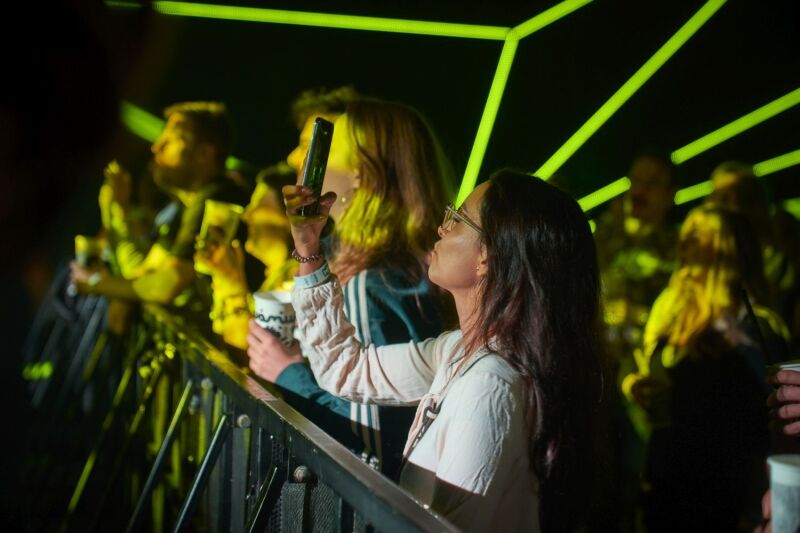
At the Budapest event, the Hungarian experimental music scene will be represented by Alley Catss, aka Máté Előd Janky, who is one of the defining voices of the Hungarian scene. Active since 2011, he is the founder of the Daddypower label; his work blends abstract ambient, musique concrète and experimental electronica. Janky’s set will be followed by the enigmatic MDX, an artist of the Manchester-based Skam Records and a regular guest on Autechre’s European tours in recent years. Another unique feature of the event is that it will take place in complete darkness; this seemingly unusual choice is to encourage the audience to focus solely on the music, rather than on the performers on stage or the lighting effects. Nothing can divert the listeners’ attention from the constant, subtle shifts in the soundscape: the session of sonic immersion that Autechre will present in October is guaranteed to be a singular experience.
The article was originally published in the 2026 edition of Liszt Fest Magazine.
Lead photo: Autechre © Bafic