

It is never cultures that meet, but people who bring along the narratives of their own cultures and communities; their preconceptions, presumed knowledge, experiences, memories and sensibilities – or rather, a momentary combination of these that is usually reflected upon, but is intricate and unfathomable even to themselves. It would be wrong to infer from this that nothing can be said about cultures and their points of contact; what is clear is that frameworks are offered – based on our choices (our ways of reasoning, ideology, beliefs, language, etc.) – that may be valid, authentic, useful and informative, but are by no means normative or prescriptive. On the occasion of Liszt Fest, allow me to shrink the infinity of the cultural space down to the still too vast expanse of Romani music, and then to narrow it down even further for practical reasons, even at the risk of leaving out a portion disturbingly larger than what has been described.
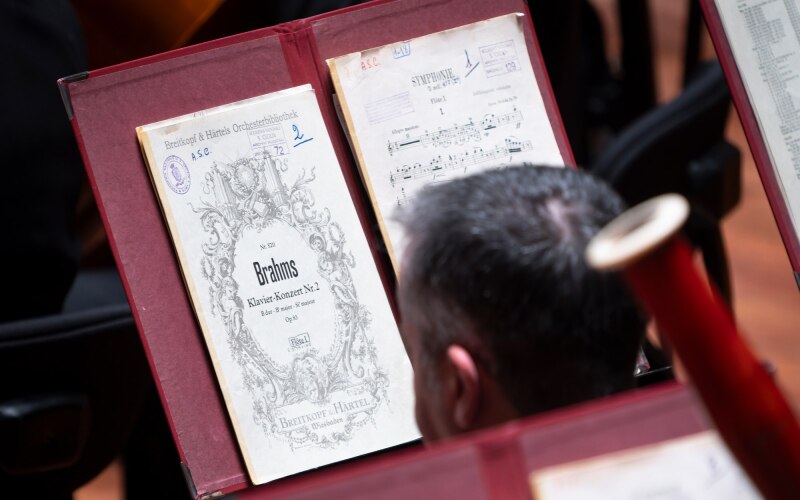
Our everyday notions of Romani music run a wide gamut and are typically shaped by our experiences, our social interaction with music, and the dominant representations of this music in the media. Even if you think of Romani music in these broad terms alone, you will recognize a wide variety of genres, styles and performance modes. The images you will have formed will be completely different depending on whether you think of Roma performers on talent shows; if your primary experience is the lunchtime radio programme Jó ebédhez szól a nóta, which serves up Gypsy music; if you’re a jazz enthusiast visiting festivals across Central and Eastern Europe; if you’re a lover of classical music who listens to Liszt, Brahms, Haydn and Bizet; if you’re hearing Goran Bregović’s Orchestra, a concert of Parno Graszt, Ferenc Snétberger’s guitar playing, flamenco or the rap of contemporary urban hip-hop culture; or if you’re simply having fun at a wedding. And if you expand the scope of Romani music both in time and space, as Tony Gatlif did in his unique road movie, Latcho Drom (1993), you will find even more diverse musical languages.
So if we’re looking for a simple answer to the question of what Romani music actually is, what might come to mind is “it is unknown,” or perhaps “it is many things.” But these are not answers that should satisfy us. Scholarly experience shows that a lack of answers generally stems from the way a given question is framed. It is likely that our question is imprecise, or rather that the question itself hinges on a firm expectation that Romani music has a definable form. But if we let go of this unfounded expectation, we can make room for narratives about Romani music, such as Svanibor Pettan’s book about musicians in Kosovo. This also means that we must let go of the romanticizing and prejudiced notion that Romani music is somehow homogeneous. “They are all sorts,” quipped Zsolt Csalog in the 1970s when asked what the Roma are like, and the same starting position could serve us well as we formulate approaches to their music.
There is a significant tradition in academic circles of narratives on Romani musical culture; of these, Liszt Fest compels us to focus on a single genre.
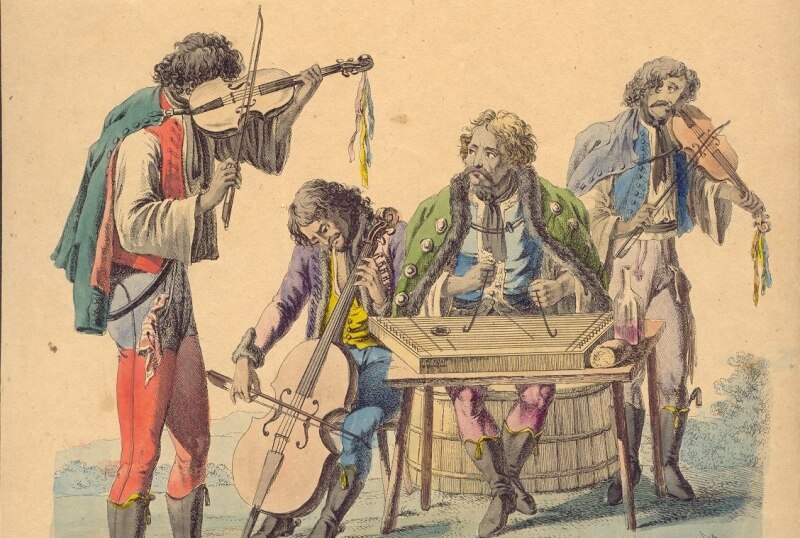
Bálint Sárosi’s work is of decisive importance, not only because of his thorough historical research and interpretative approach, but also because he established the paradigm of the “Gypsy band.” Without wishing to draw the reader into a terminological debate, I want to note that Sárosi uses the term because it allows him to sidestep the “wrong” question; after all, he is not discussing Romani music per se, but rather the development of the Gypsy band in a historical context, here in the Carpathian Basin. In this sense, a genre can be identified – Gypsy café music – along with its socio-historical context and the personal life stories of its protagonists, i.e. the musicians. From this angle – and with the evidence of other outstanding authors like Csaba Szíjártó, Ernő Kállai, Erika Nyerges, Géza Csemer, Tamás Hajnáczky and others – a musical culture emerges that keeps unfolding, enduring and influencing to this day, commonly referred to as that of the imitation folk song, or “Gypsy café music.” Not only was this music an inspiring, personal experience for Romantic composers, it is also the reason even those least familiar with the genre will recognize the names of such great band leaders and composers as Pista Dankó, János Bihari, Panna Czinka, Károly Bura, Pali Rácz and Jancsi Rigó – if only because public spaces and institutions bear their names, or they have become eponyms. Famous to this day, these band leaders enjoyed extraordinary popularity in their own time, with a veritable cult developing around Bihari and Dankó. From the early decades of the 19th century, Gypsy bands and their leaders were frequently featured in society magazines across Europe: Politisches Volkblatt, for instance, announced the death of Pali Rácz on its front page in 1885. Reviews of bands’ performances appeared regularly.
Let me attempt to paint a broad picture of how this musical genre emerged and remained in the public ear, from its beginnings in the late 18th century until around the mid-20th century. Our story starts with 18th-century feudal society and the noble estates (mostly) in the countryside, where musicians were employed for cultural and social events – though they were rarely full-time players and were more likely complementing their agricultural or service-related work. The musical genre under discussion grew out of this milieu, typically drawing on and transforming the musical tradition of the peasantry. The genre gained momentum thanks to urbanization – a belated yet dynamic process in Hungary – and as a result, by the end of the 19th century, Gypsy bands had established themselves in the public spaces of major cities, as well as in spas and holiday resorts across most of Austria-Hungary, from Vienna through Kolozsvár to Budapest, the latter of which had become one of Europe’s café capitals by the turn of the century. This change also influenced the perception of the Roma, with Gypsy musicians becoming part of the bourgeois, urbanized social landscape; forging links with the sociopolitical and cultural-artistic elite of the era; becoming figures in contemporary poetry and prose; and sometimes forming genuine friendships with members of the elite, as in the case of Pista Dankó and the poet Endre Ady, a story immortalized by Géza Csemer in his “dream novel.” The bands were helped in these ambitions by patrons such as Archduke Joseph of Austria, whose correspondence (published under the editorship of István Soós) offers remembrances of many a band, leader and venue.
We must not forget that the ideological framework of the bourgeois transformation – which left intact the feudal social structure upon which it emerged, with consequences that are felt to this day – was nation-building. Its art-historical context, in turn, was provided by (national) Romanticism. As the 19th century was nearing its end, musicians of the most varied ethnicities were vying for popularity, which can be looked upon as a race for assimilation; in a field shared with Jewish, German and Slovak groups, military bands and choral societies, Romani ensembles unquestionably took the trophy of “Hungarian music.”
This brings us to the relationship between Franz Liszt and Gypsy music. During his visits to Hungary, Liszt encountered Gypsy music as entertainment, a part of the hospitality service. He both recognized what he heard as Hungarian music – thus embracing the period’s narrative of national identity – and was captivated by its performance, the instrumental virtuosity, which was none other than the musical touchstone of Romanticism (we need only consider the composer-performer’s own Paganini Études). Unsurprisingly, this musical experience inspired Liszt to write a book, which he titled Des Bohémiens et de leur musique en Hongrie (On Gypsies and Their Music in Hungary), the Hungarian translation of which is still in print, thanks to the publisher Magyar Mercurius. János Róbert Orsós has analysed the ideology behind Liszt’s narrative in an excellent study; suffice it to say here that Liszt recorded a revelatory experience, while his conclusions and reflections were largely fallacious, owing to the interpretative horizon prevalent at the time. Des Bohémiens portrays the Roma in general as exotic, enigmatic and highly talented, but different from European peoples, romanticizing them as the children of nature and casting them not merely as a source of inspiration for the arts, but also as a metaphor for them, thereby depriving the performers of their autonomy and individuality.
So there is such a thing as Romani music, and it owes its diversity less to musical genres, eras and geographical locations, but more to the fact that it is created by individual composers and performers, whose desire to communicate is inalienably their own, as is their musical language, whether their chosen form is pop music, jazz, folk, café or classical music. And it is through this individuality that the communal experience finds its voice and leaves its mark, as it does on every one of us, because our communal identities cannot (and must not) be cancelled by our individuality, just as our communal affiliations cannot consume the individual who belongs to them.
The article was originally published in the 2026 edition of Liszt Fest Magazine.
Lead photo: József Bikessy-Heinbucher: Musicirende Zigeuner in Ungarn (1820) / Source: Museum of Etnography