

Why is the group of symphonic orchestras known as the ‘Big Five’ exactly five strong? What made Philadelphia, Chicago or Cleveland sound different? The label originated during the golden age of the record industry, but today it perhaps says more about a particular era than about the current pecking order of American orchestras.
When it comes to the elite symphony orchestras of the United States, the term ‘Big Five’ still comes up almost automatically. They are—as music connoisseurs will tell you without giving it a thought—the New York Philharmonic, the Boston Symphony Orchestra, the Chicago Symphony Orchestra, the Philadelphia Orchestra and the Cleveland Orchestra. They do not form an official association, nor is the list the result of a competition. The term came into circulation in the late 1950s, when radio broadcasts, the record industry and conductor giants turned a few ensembles into national, and then, international, brands. Originally, there was talk of the ‘Big Three’—meaning the ensembles of New York, Boston and Philadelphia—before Fritz Reiner brought Chicago, and György Széll, Cleveland, into the fold. Along with the high artistic standards, the prestige also stemmed from the long seasons, the high musician salaries, the recording contracts and the international exposure.
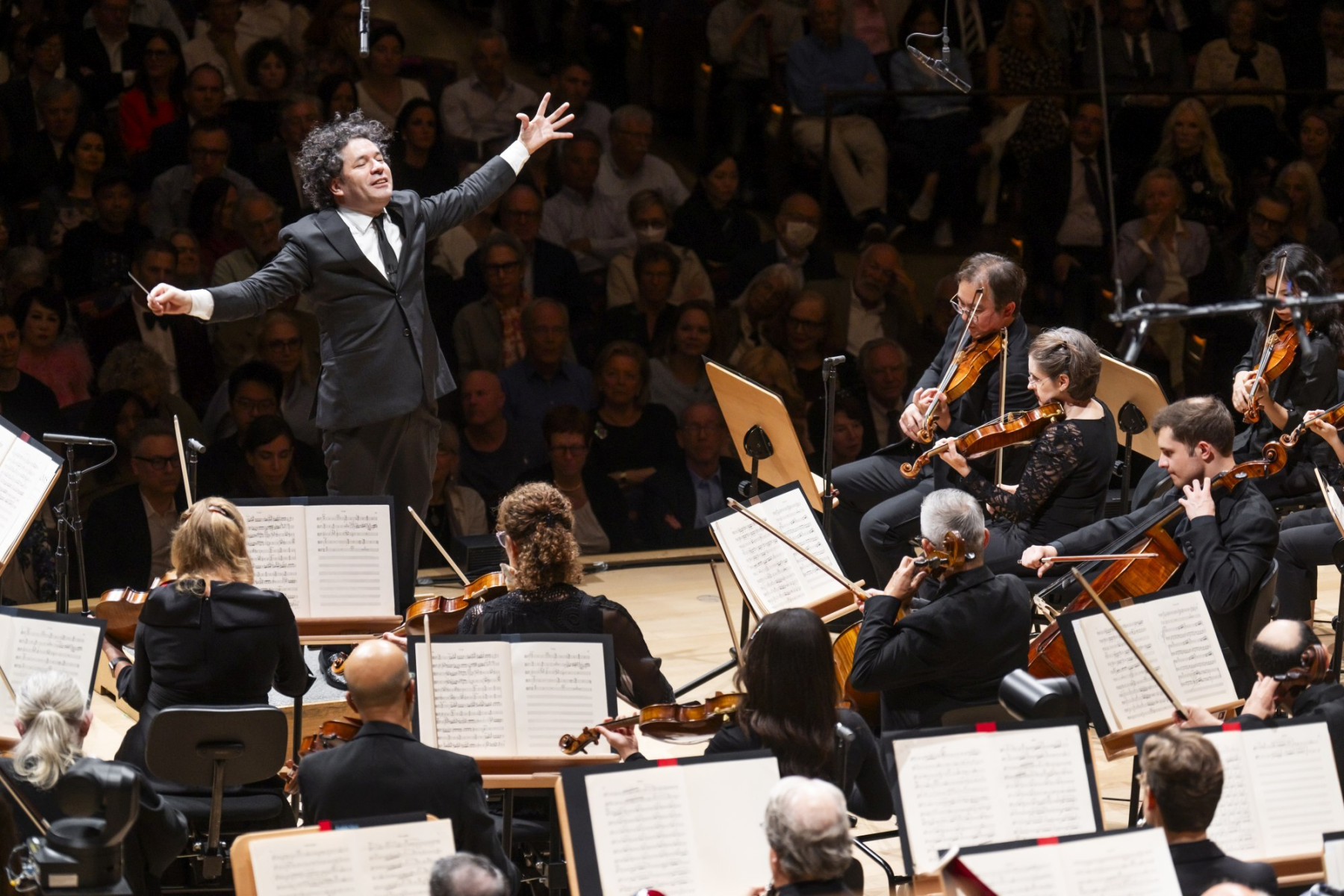 Gustavo Dudamel & the New York Philharmonic © Chris Lee
The oldest is the New York Philharmonic, founded in 1842. Its past is a veritable history of conducting, from Gustav Mahler through Arturo Toscanini and John Barbirolli to Leonard Bernstein at its helm. Bernstein’s tenure (1958–1969) was particularly important: with his television appearances and his personality, he made the orchestra one of the icons of American cultural life. The archive of the New York Philharmonic is a special treasure trove, preserving the past with programmes, sheet music, correspondence and recordings dating back to as far as 1842. The 2026/27 season marks the beginning of the era of Gustavo Dudamel as music director, who, after Los Angeles, is opening a new chapter in New York.
Founded in 1881, the Boston Symphony Orchestra has a different character. Because of its history and sound culture, it is considered the most European of the Big Five. Serge Koussevitzky, who was music director for 25 years from 1924, commissioned and premiered new works, and his practice was continued by Charles Munch, Erich Leinsdorf, Seiji Ozawa and Andris Nelsons. The BSO’s Tanglewood is not only a summer venue but an important centre for American musical life: it was here that Koussevitzky founded what is now the Tanglewood Music Centre in 1940. Nelsons will step down as music director at the end of the 2026/27 season.
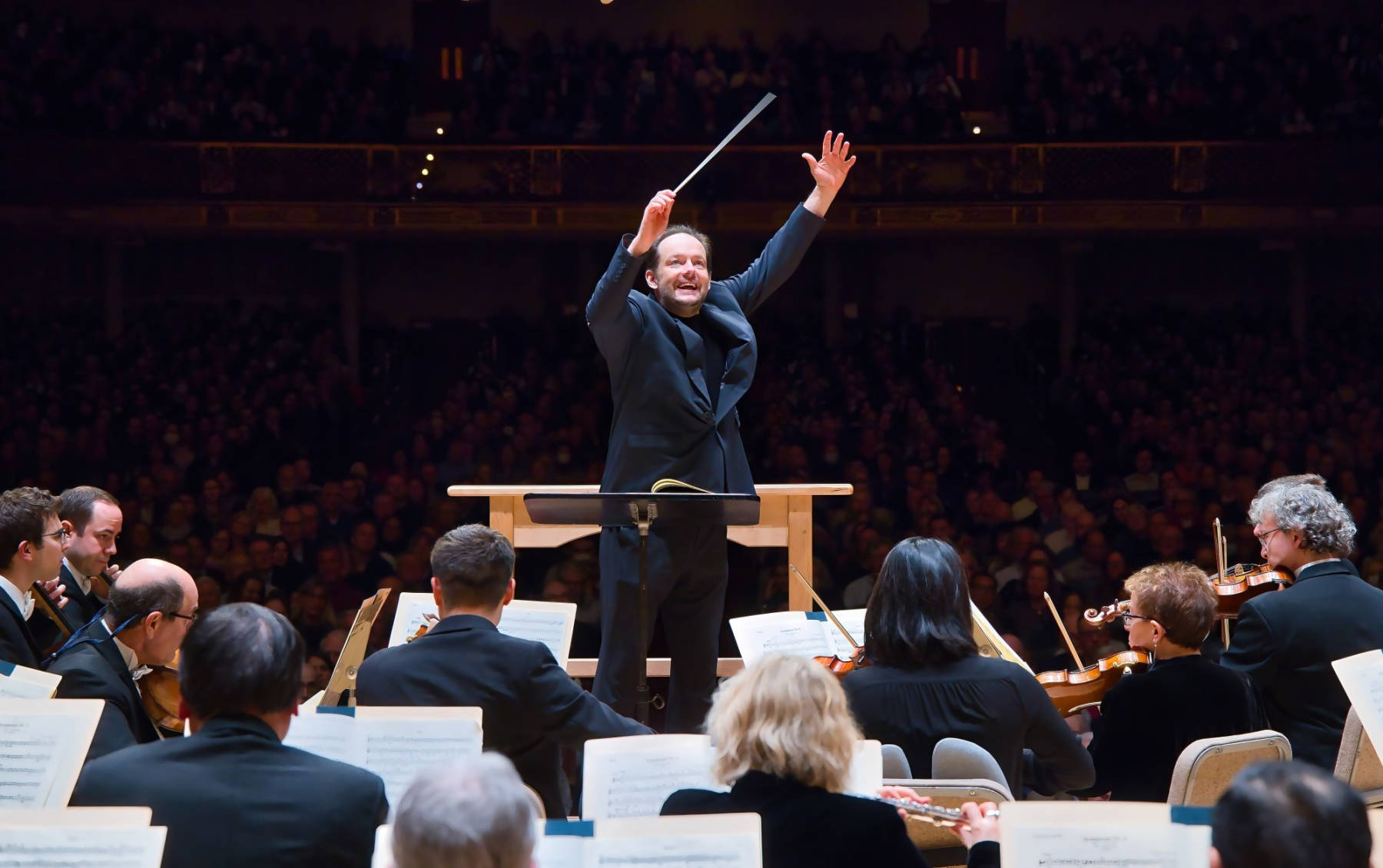 Andris Nelsons & the Boston Symphony Orchestra © Hilary Scott
Although only ten years younger than its Boston counterpart, the Chicago Symphony Orchestra is almost its antithesis. The name brings to mind a powerful, bright brass section and a dramatic sound, thanks primarily to Fritz Reiner and Georg Solti. Between 1969 and 1991, the latter built up a discography that made the sound synonymous with the orchestra and recognizable the world over. Solti was also the one to conduct the orchestra on its first European tour in 1971. Following Riccardo Muti’s long tenure, Klaus Mäkelä, who will be music director from 2027, represents a new generation.
If the brilliant brass is the signature of Chicago, Philadelphia is associated with a legendary string section. The rich and full-bodied ‘Philadelphia Sound’ was developed by Leopold Stokowski at the beginning of the 20th century, and was then further honed for decades and recorded on a multitude of albums by Eugene Ormándy. Rachmaninoff was particularly fond of the ensemble, and wrote his Symphony No. 3 for them. The orchestra’s history also includes a remarkable episode of cultural diplomacy: in 1973, they became the first major American ensemble to tour the People’s Republic of China, barely a year after Nixon’s historic visit to Beijing. Today, it is led by Yannick Nézet-Séguin.
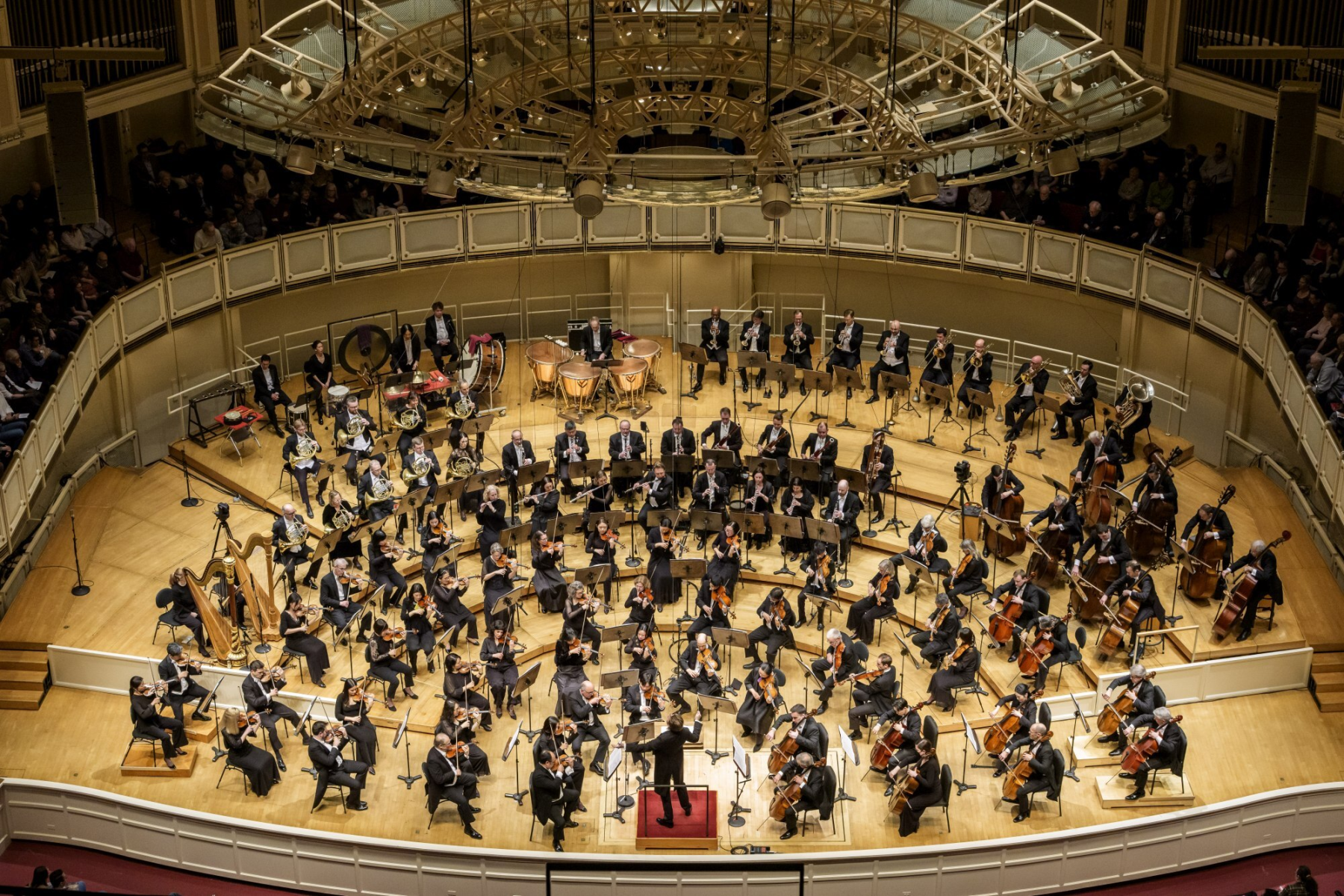 Klaus Mäkelä & the Chicago Symphony Orchestra © Todd Rosenberg
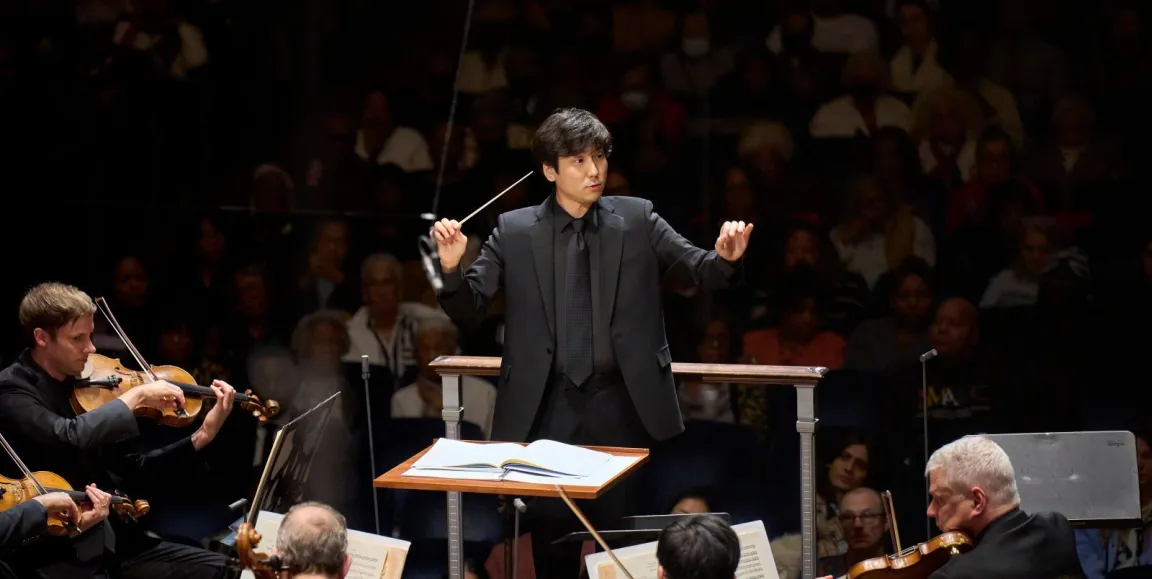
The Cleveland Orchestra is the youngest of the Big Five. Founded in 1918, the orchestra was made world-famous primarily by George Széll, who, between 1946 and 1970, developed extraordinary precision, discipline and a transparent sound. His legendary rigour even extended to the acoustics: the permanent sound reflector created during the 1958 refurbishment of the hall was referred to by the musicians as the ‘Szell Shell.’ This was the tradition Lorin Maazel, Christoph von Dohnányi and Franz Welser-Möst could rely on and shape further. The 2026/27 season is Welser-Möst’s twenty-fifth and last at the helm of the orchestra, which on 13 October can be heard in Müpa Budapest at the Liszt Fest, performing works by Liszt, Martinů and Brahms.
Their being exceptionally good may well have been the common denominator of the Big Five, which developed markedly different profiles during the respective eras of their great conductors. Philadelphia’s velvety strings, Chicago’s elemental brass, Cleveland’s precision and colouristic sensitivity, Boston’s European elegance and New York’s energetic, quick-to-respond playing are, in part, the legacy of an era when a music director could spend decades refining the sound of his ensemble. The recordings made these differences evident to everyone in the world.
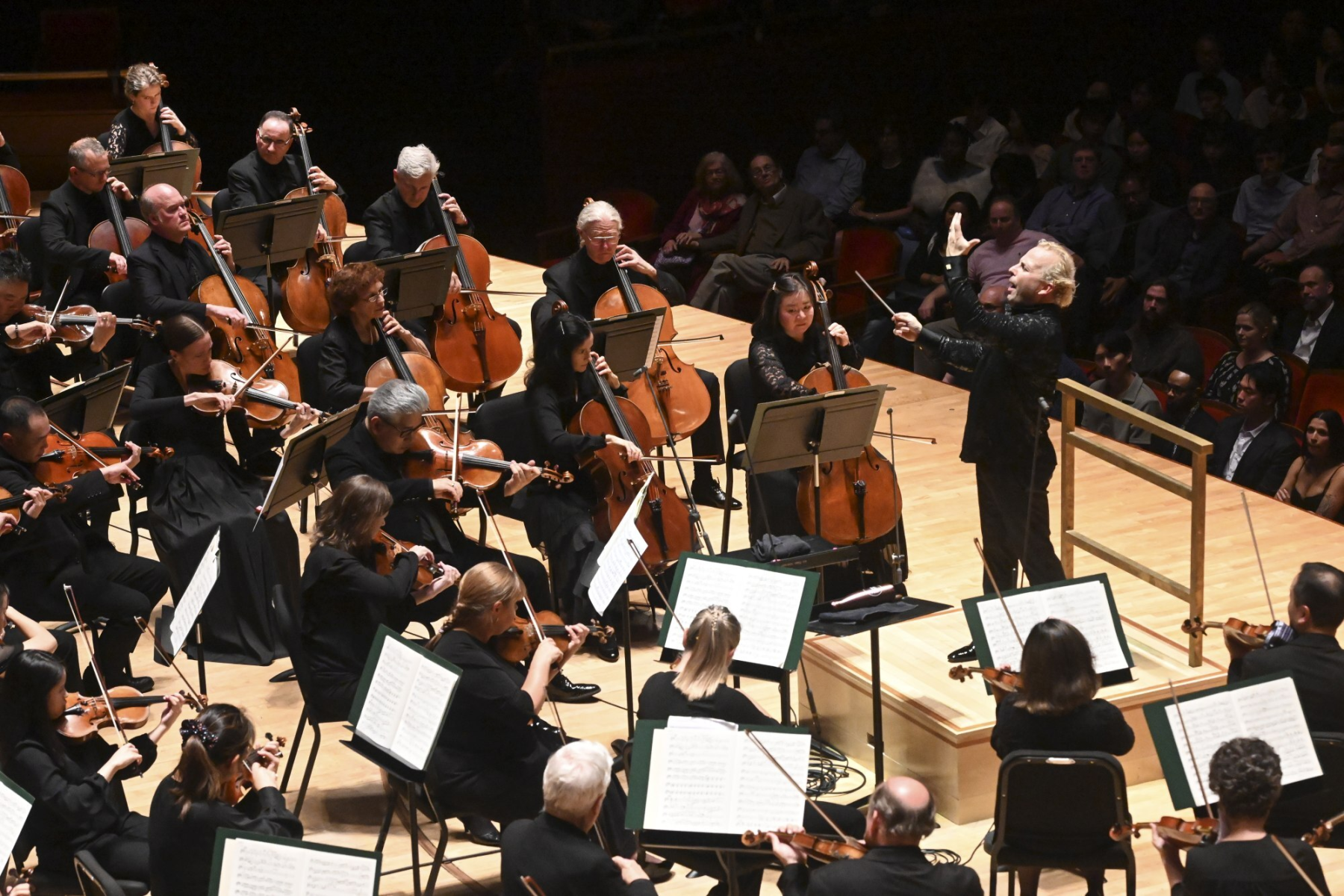 Yannick Nézet-Séguin & the Philadelphia Orchestra © Pete Checchia
But the world in which the ‘Big Five’ emerged has changed. Major record deals have lost their former importance, musicians have become more mobile, and many American orchestras have reached a level that would be hard to describe as the second tier. The orchestras of Los Angeles, Pittsburgh, Minnesota, San Francisco and Dallas are now all in the top league of America. In 2008, Los Angeles was already among the best ten international orchestras, along with Chicago and Cleveland, while Philadelphia did not make it into the top twenty.
So the question keeps cropping up from time to time in the specialist press and on music lovers’ forums: does it still make sense to talk about the ‘Big Five?’ The answer may be in the affirmative if it is used as a historical term—as the common sobriquet of five orchestras in an era when world-famous sound ideals were jointly shaped by conductors, radio stations and the record industry.
Lead photo: Franz Welser-Möst & Cleveland Orchestra © Extraordinaire Photos