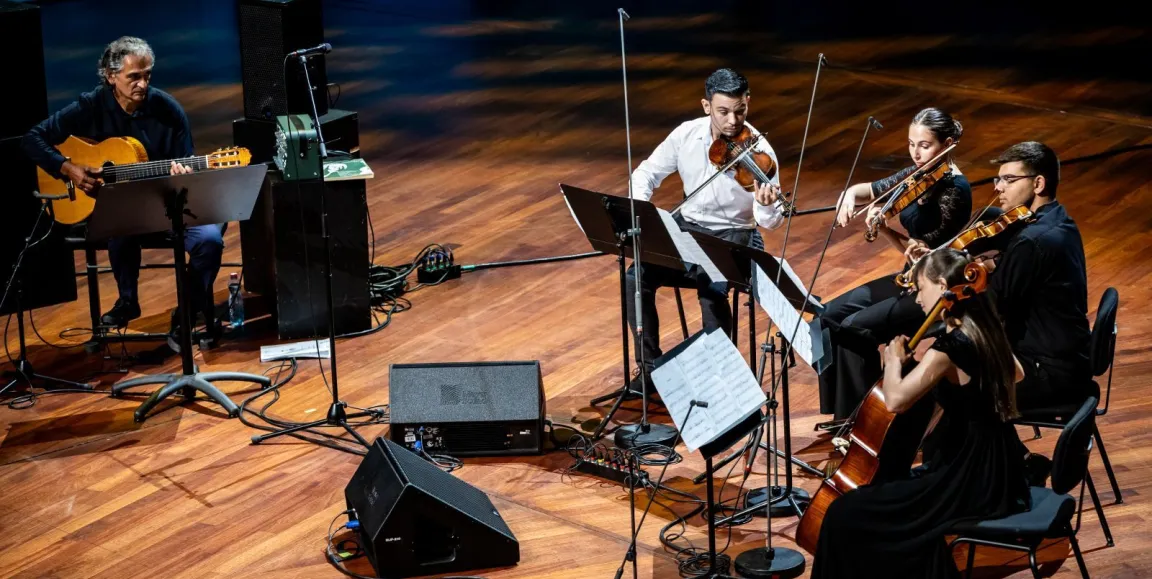


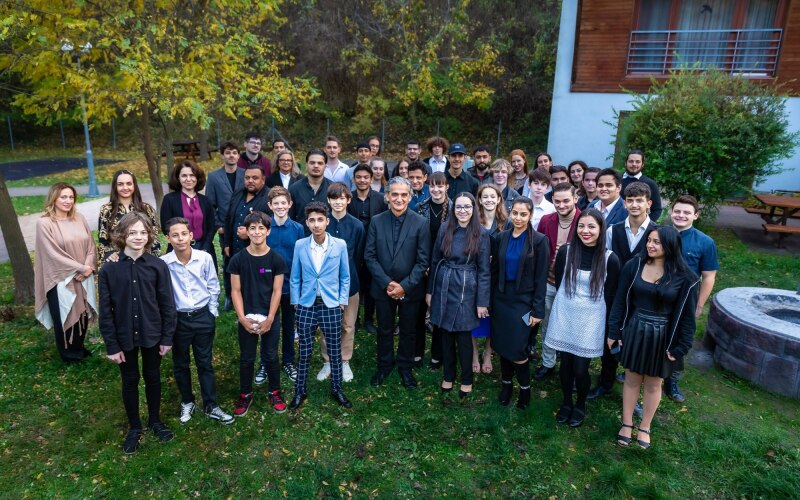
Thirty young musicians, four weeks in Felsőörs, and a teacher who doesn’t provide ready-made answers but plays alongside his pupils. A day at the Snétberger Music Talent Centre, where it soon becomes clear that the most important lesson isn’t learned from sheet music.
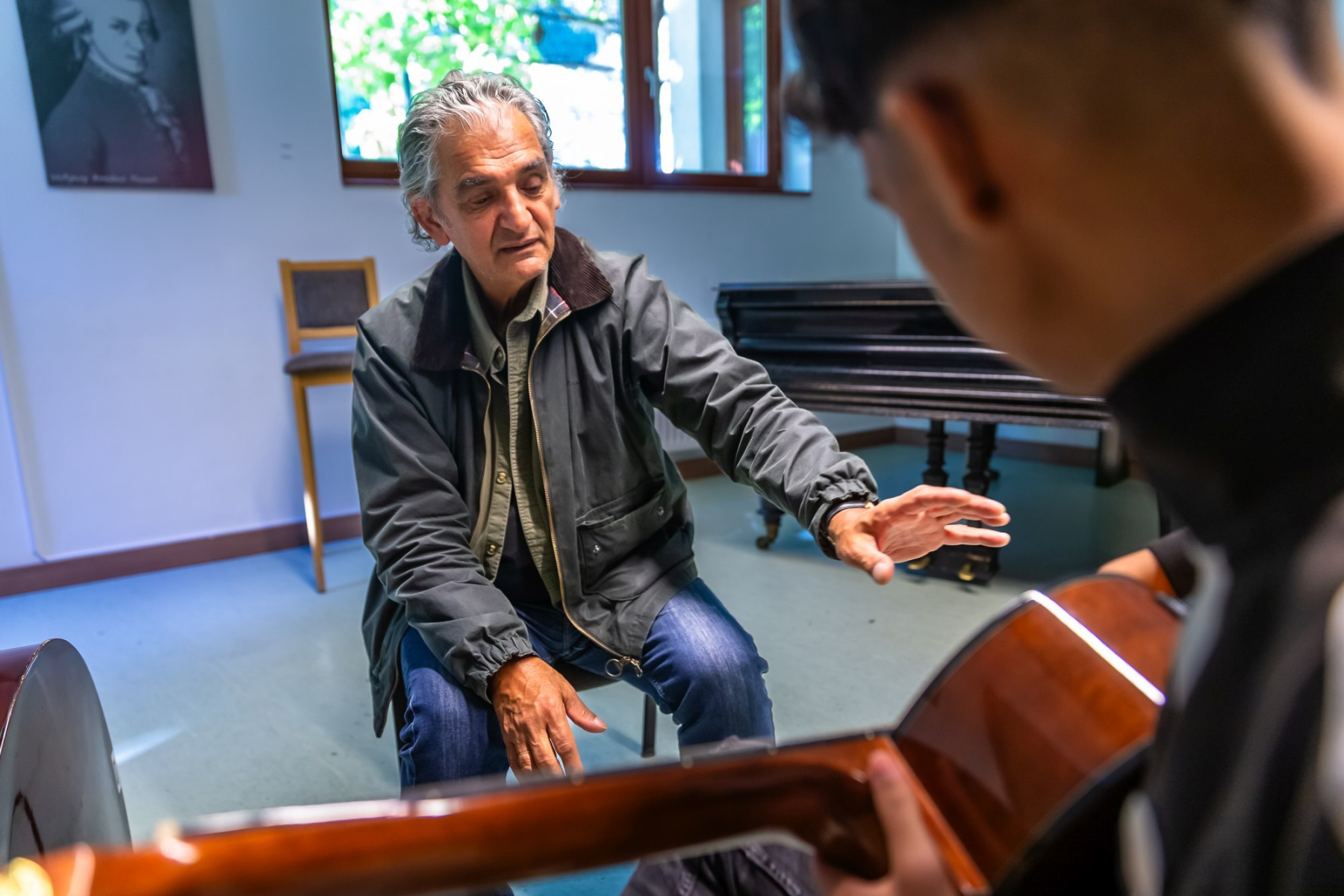
‘The beginning was good,’ Ferenc Snétberger looks up with a smile at the two boys playing guitar. There’s no long-winded explanation, no hyperbolic praise. He plays a few notes, hands the melody back to them, listens, asks questions, and demonstrates it again. The two pupils give the piece another go, and he plays along with them. Throughout the lesson, teaching and joint playing alternate seamlessly.
I arrived in Felsőörs this morning for the summer course at the Snétberger Music Talent Centre. Thirty young musicians will spend the next four weeks together at the institution, which was established fifteen years ago. The two guitarists, Richárd Balázs and Barnabás Töttős, come from completely different backgrounds. Richárd is from Tarnabod, Barnabás from Budapest. By the time we sit down to talk, these differences are no longer relevant. They are connected by the same music, are driven by the same curiosity, and they learn from the same master. The rapport that marked their playing continues in conversation as they finish each other’s sentences.
Their musical journeys began quite differently. Richárd has always been drawn to jazz. ‘I tend to play by ear. Improvisation is closer to my heart, which is why I feel I should now learn the classical basics. They give you technique and a different way of thinking, which comes in handy in jazz too.’
By contrast, Barnabás is a classical guitarist and a student at the Bartók Béla Conservatoire. ‘I didn’t like to listen to jazz before I came here. I don’t think my ears were mature enough for it. Now I’ve come to love it, and interestingly, playing jazz has opened my ears to certain aspects of classical music as well.’
I ask them what makes a collaboration like this work so well, and the answer comes back without hesitation. ‘You have to feel each other,’ says Richárd. ‘Play the music, enjoy the whole thing. There’s a flow that carries you along.’ ‘Unless you enjoy it,’ Barnabás adds, 'the music won’t be really good'. As we wrap up our chat, they talk about why they love coming back to Felsőörs year after year. ‘It’s like being in a bubble where music is the only thing to surround you,’ Barnabás says.
In the next room, an ensemble rehearsal is about to start, and at first glance, it’s hard to tell the teachers from the pupils. Toni Snétberger, Zsolt Farkas and Géza Jónás are as much a part of the band as the young people. ‘Can’t you play by ear? Put that sheet music away. Just play, don’t read. It’s okay to make mistakes,’ Toni Snétberger tells one of the boys. The next go is a little more relaxed. A few minutes later, they stop again. ‘You can’t play if you’re afraid. You can’t even step out on the street.’
After the rehearsal, Toni talks about how at the centre the teacher-pupil relationship is unlike that in a traditional music school. ‘These young people and we are walking on the same path; it’s just that we’re a bit further ahead.’ He thinks a musician must never stop improving, technically as much as in character. For the same reason, for him an ensemble is about both joint music making and collective thinking: you must learn to pay attention to the others, tell the others if something is not working, and deliver your critique in a way that is not hurtful but helps you all to move on.
The band starts the piece again. After a few bars, Zsolt Farkas raises his hand. ‘At times likes these, you can tell who listens to jazz, because it’s in their ears.’
A few minutes later, as the piano begins to solo, he interrupts again. ‘Beni, if you go full blast at the start, you’ll be in trouble later on. Build it up.’ ‘I was panicking about what to play,’ comes the reply. ‘Play less. Have your fill of the piano, but build it up, and you’ll be the star at tomorrow’s concert.’
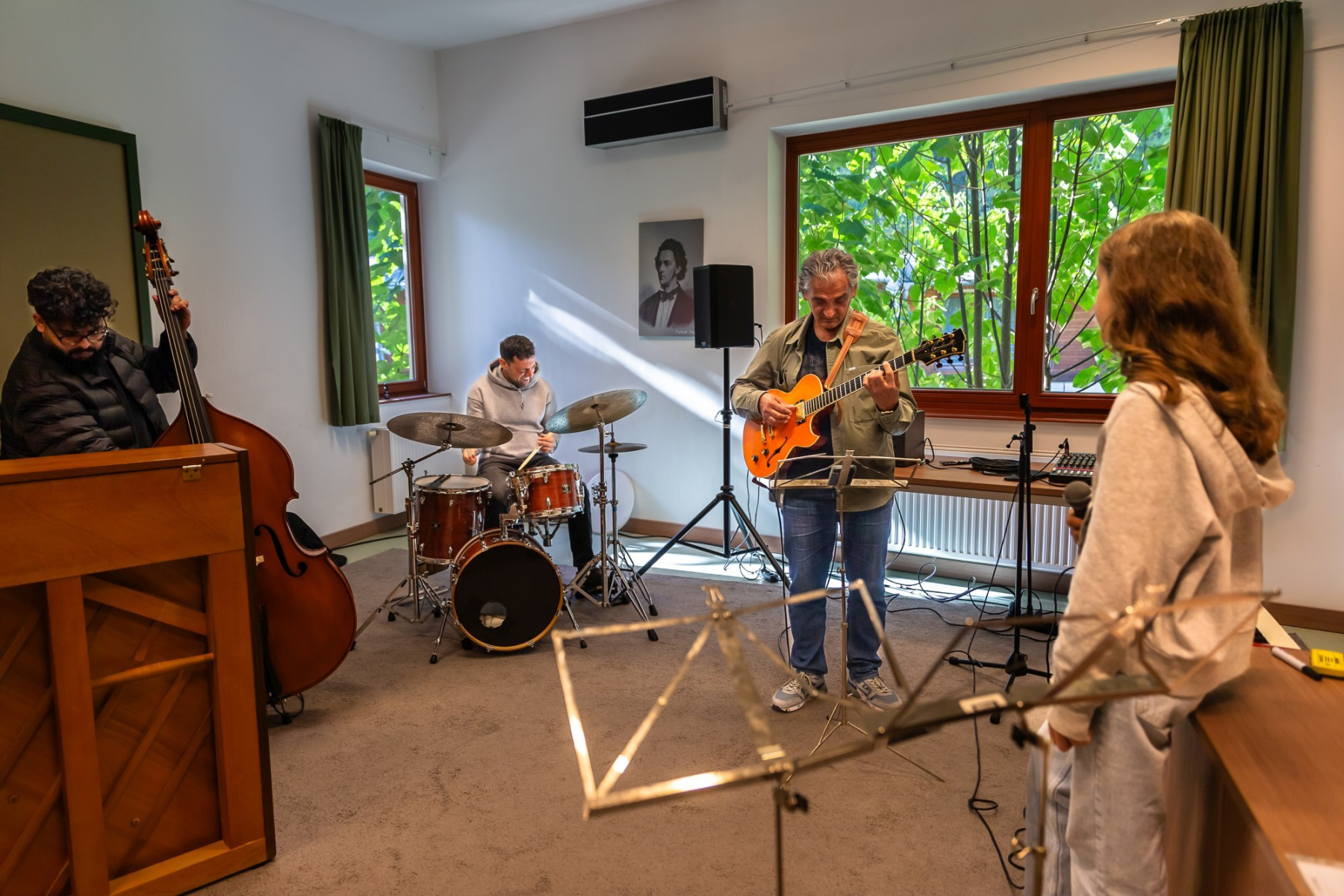
Meanwhile, Flóra Bakonszegi announces the title of the next song. Géza Jónás turns to the band with a smile. ‘Swing again? All right, I’ll respect your choice.’
Flóra later tells me that swing is her favourite. ‘I really love ballads too, and I sing a lot of bossa nova with Uncle Feri,’ says the young girl, who came to the Snétberger Centre four years ago as a classical pianist, but now considers a career as a jazz singer.
What she enjoys most, however, is making music together. ‘The ensemble lessons are the most exciting. That’s where I can improve the most, because I learn to work with others and adapt to them. I still get stage fright before performances, but in a completely different way to how I used to. When I play with my ensemble teachers, I know everything will be fine,’ she says.
Flóra’s trust is not unfounded. The teachers who lead the band today were among the students here just a few years ago. Géza Jónás clearly does not believe in rigid roles. Although he has gained recognition as a double bassist, he occasionally picks up a guitar or a bass guitar, and at today’s rehearsal, much to the surprise of his fellow musicians, he even breaks into song to demonstrate the end of a phrase. ‘I like to teach in a playful way. When we play, we can work together much more naturally.’
He thinks the strength of the camp lies in making music together. ‘Here, we can practise playing together very intensively. The children learn at a young age what it means to take responsibility for the team. And that if I turn up to rehearsal unprepared, the other four people will also suffer as a result. That’s very important.’
Although the rehearsal comes to an end, the most important moments at the Snétberger Centre, says Zsolt Farkas, often take place when the official classes are over. ‘Although they make huge progress during the sessions, of course, they learn just as much from each other. In the evenings, they take out their instruments, swap ideas, and listen to what the others are working on. That’s why it’s great to be here. We’re surrounded by music from morning till night.’
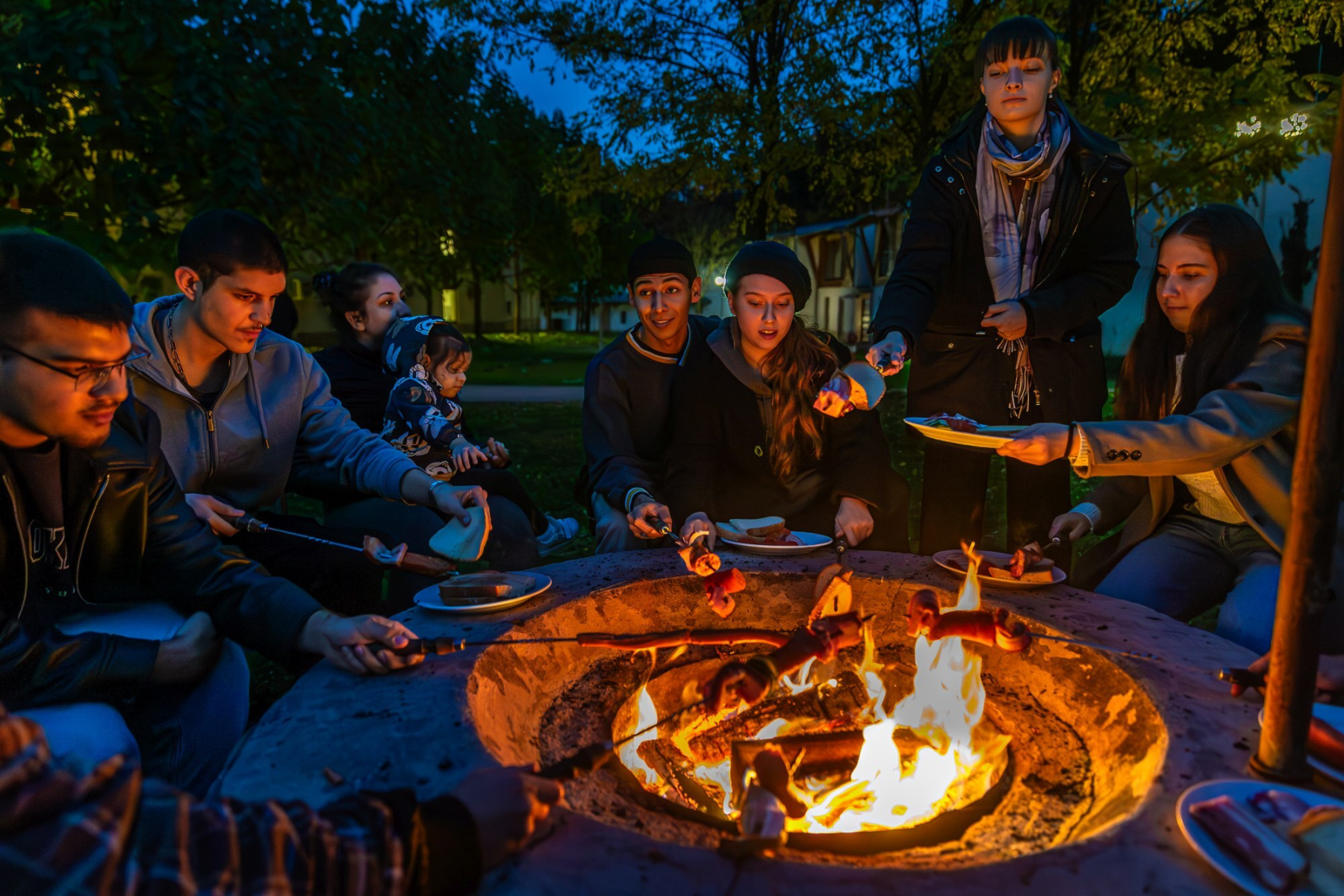
However, the Snétberger Centre is not just a four-week summer course. They continue to work together in the spring and autumn at two-week sessions, so the young people stay in touch with each other and their teachers for months on end. Teenage drummer Zoltán Bogdán joined the programme last year. ‘For me, this camp is like a second family,’ he says guilelessly. He doesn’t mean it to be high-sounding. He tells me that they keep in touch between courses, phoning each other and counting down the days together until their next meeting.
Previously, the students were also supported by a mentoring programme that ran throughout the year. A tighter budget now prevents the centre from carrying on with that programme, when it, in fact, ensured continuity between the courses, says Ferenc Snétberger.
Berki Barbora’s history is quite different. She came from Slovakia as a classical pianist, and continues to play primarily Chopin, Schubert or Tchaikovsky. So it is particularly interesting that she highlights the very same thing as her jazz-playing peers. ‘Nobody here feels left out. Everyone is friendly, open-minded and helpful. What takes me half a year to learn at home, I learn it here in a month.’
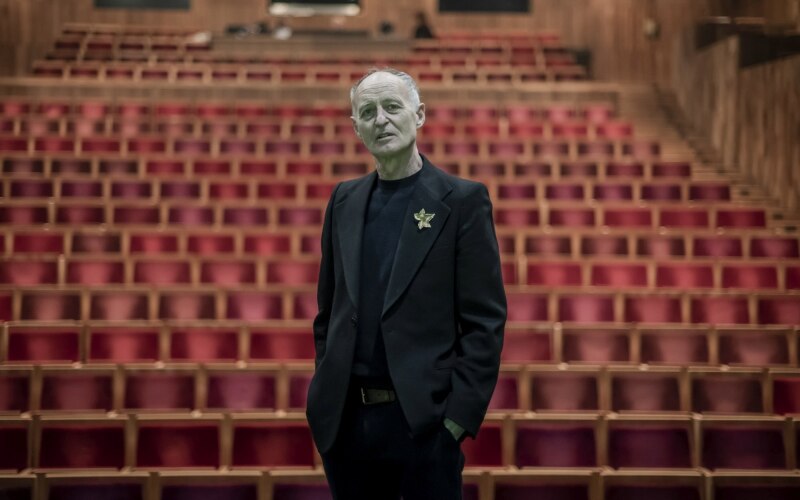
By the end of the day, it becomes clear that there is also a personal story behind the Snétberger Centre’s educational concept. Ferenc Snétberger says the idea dates back to his own childhood. It wasn’t easy for him to get started as a musician, which is why he wanted to create a place where talented young people would receive more support than he himself had once received. This intent has not changed over the past fifteen years.
‘This isn’t like a music school; we don’t teach according to a set formula. Every child is different, and we always start from what they know.’ Over the years, however, the centre has become more than just a music workshop. ‘Along with the music, they also come to love each other,’ he says.
The centre boasts impressive figures, with around 85 per cent of the students gaining admission to a music school in Hungary or abroad, and most performing on prestigious stages from a young age. However, what makes Ferenc Snétberger the proudest is not these results, but seeing students find their ways, coming into their own as musicians and humans.
In Felsőörs, they do not merely train musicians. They are building a community in which music is a common language, and trust is just as much part of the curriculum as scales or improvisation.
The article was originally published in the 2026 edition of Liszt Fest Magazine.
Lead photo and pictures: Zsolt Melczer