

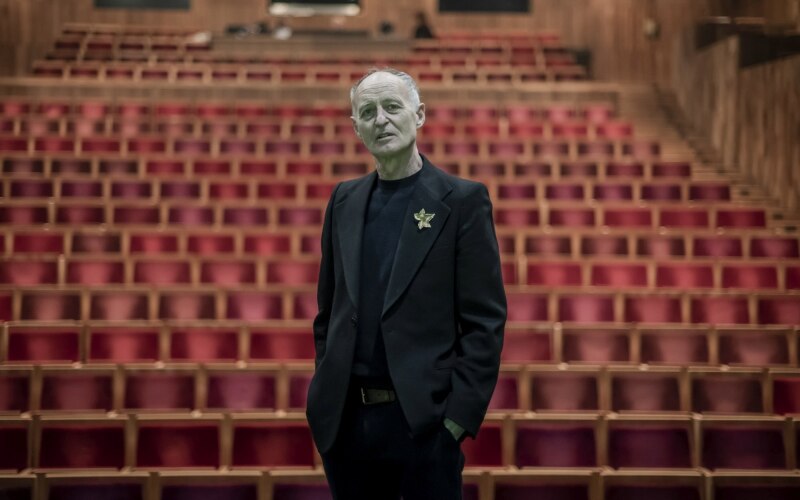
As technology advances, less and less is left to chance, when it is often precisely the unexpected encounters that shape our lives. What does it mean to remain human in a world where being programmed is slowly overriding instinct? This is the question the Kossuth Prize-winning choreographer Pál Frenák explores in his latest work, FrenÉsie – RoadMovi(e)ng. We talked to him about creation, identity, the relationship between body and soul, and the uncertainty of the future.
FrenÉsie means madness, ecstasy or passion. What does the word signify to you?
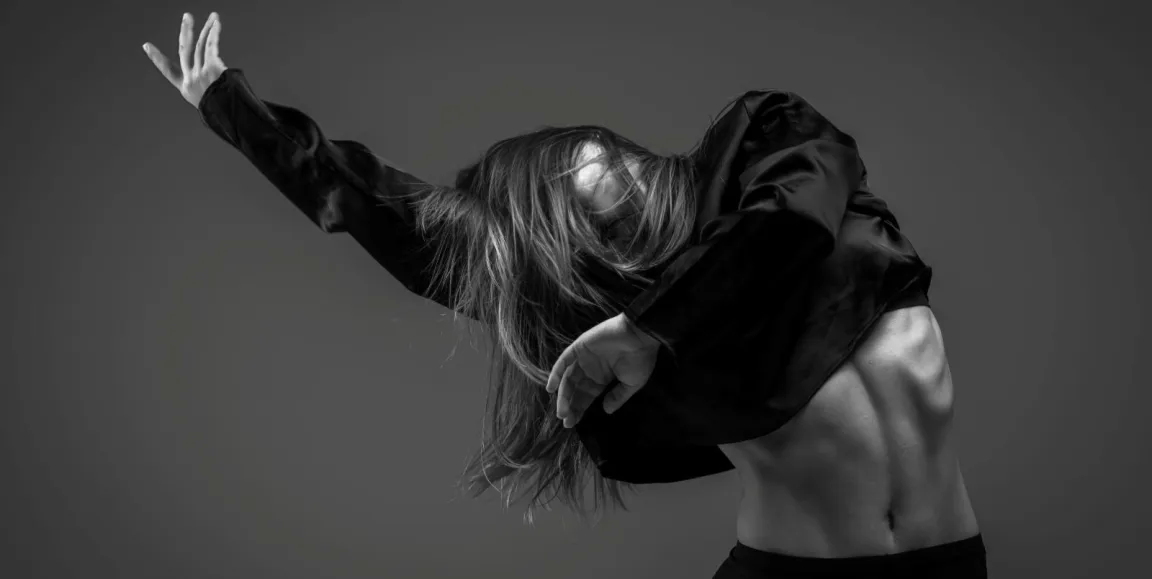
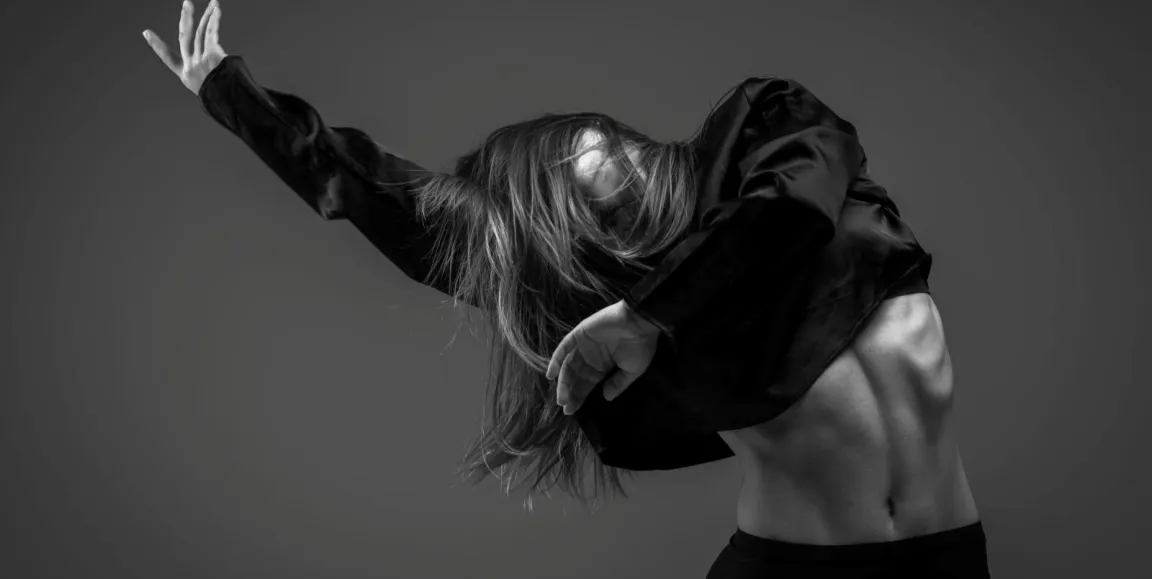
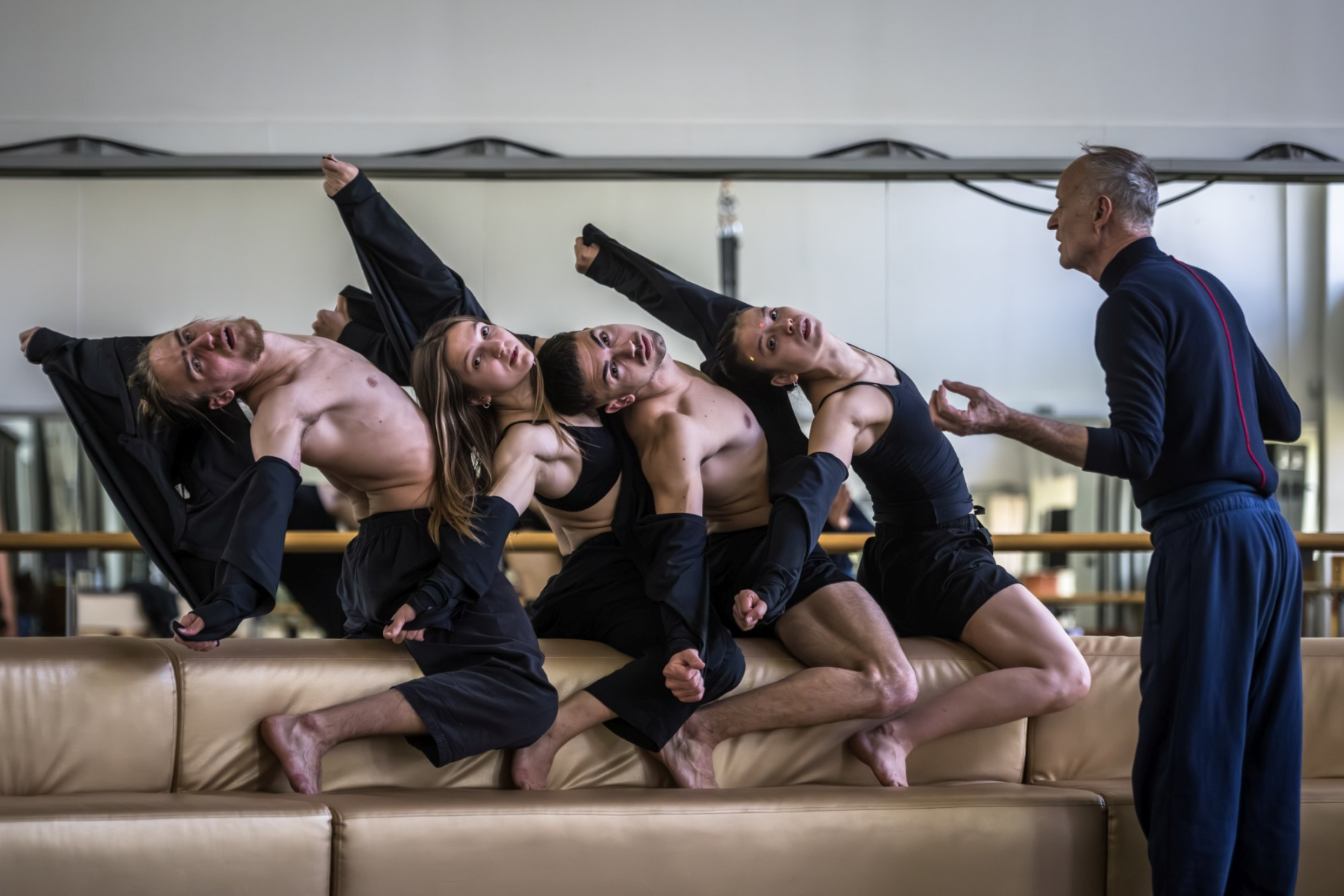
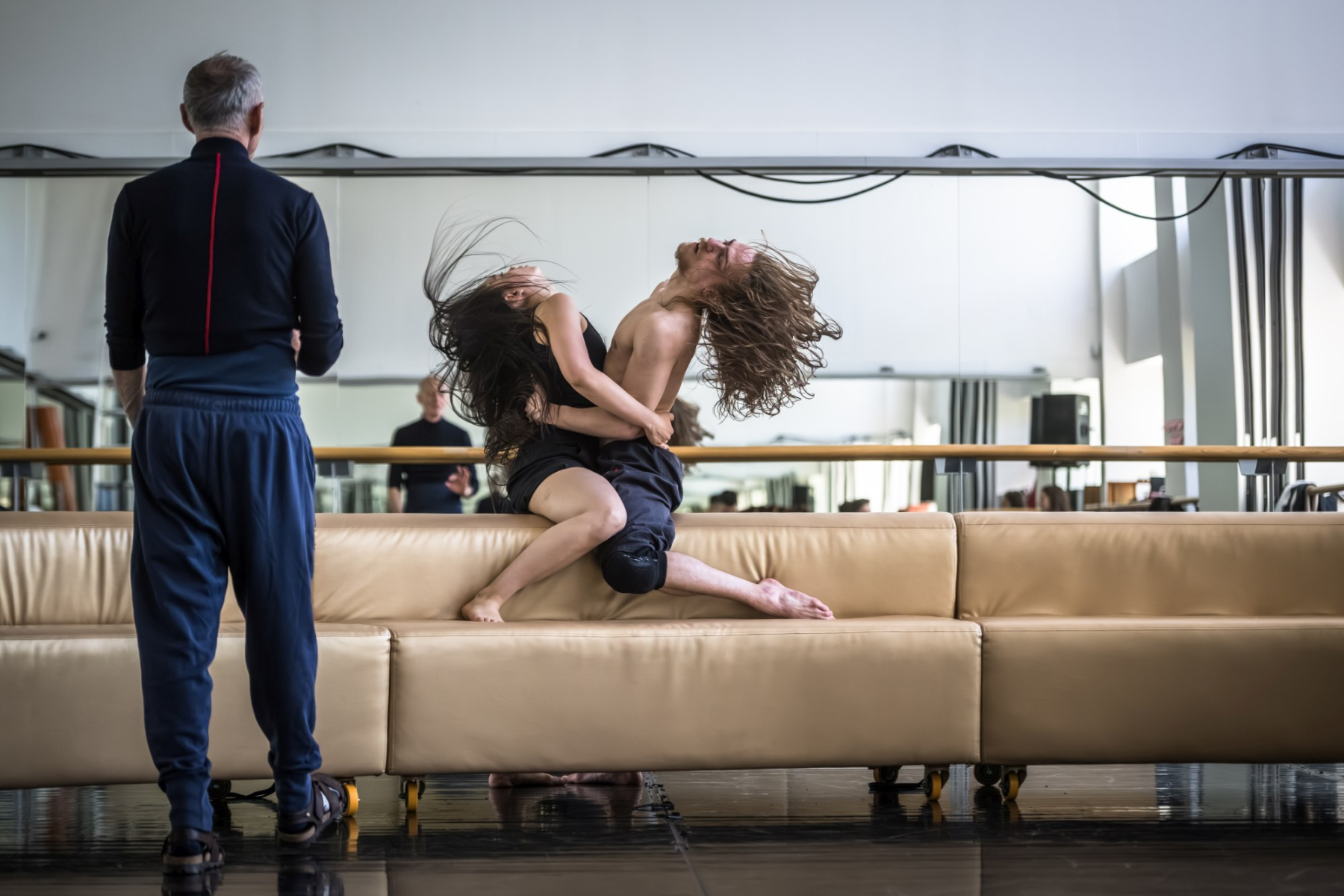
I’m always looking for titles that, instead of bringing an idea to a close, open it up. So frénésie interests me not in the everyday sense of madness, but as an inner state. As an energy that is both controlled and unstoppable. We all live in this state: everything around us has sped up and is in constant motion, while it’s becoming increasingly difficult to find ourselves. What interests me is how the body reacts to all this, because the body cannot lie. Anxiety, desire, uncertainty and hope all appear in its movements. As a consequence, the dancers are in a constant state of whirling throughout the performance. It’s as if they’re being dragged down by some invisible force, which pulls them towards a central point just as they’re trying to break away from it. It’s a highly physical, yet deeply spiritual state. For me, this is what human existence is about today.
The piece is both contemporary and futuristic. Why did you choose to approach these topics from the perspective of the future?
What I’m interested in is not the future but the present; it just so happens that sometimes it’s easier to look at the world we live in from a distance. At an incredible pace, technology is transforming our way of thinking, our relationships and even the way we perceive the world. More and more things can be calculated, planned and optimized, while chance seems to be on the wane. And yet it’s often the unpredictable moments that shape our lives. An unexpected encounter, a step in the wrong direction, a delay or a chance conversation can change the course of people’s lives. My fear is that if everything is programmed to perfection, these moments will be lost too. This is why, in the production, the present runs in parallel with a possible future. I didn’t want to decide where one ends and the other begins, as perhaps we’re already living in this transition.
We can see humans on the stage, humanoid creatures, robotic movements. What was it about this duality that fascinated you?
In my work, I’m constantly exploring boundaries. That moment when something is still human, yet no longer quite so. Or the other way round: when a fragile, very human gesture suddenly emerges from a seemingly mechanical entity. For me, this isn’t a technological issue, but a spiritual one. What makes humans human? The act of making mistakes? Of having feelings? The capacity for empathy? Having souls? Of course, I don’t have any answers, but I still like to think about these things. FrenÉsie is the second part of a trilogy about creation. The subject keeps stirring in me: it includes the mystery of divine creation, as well as the human desire to be able to create in the same manner. Nowadays, we talk about artificial intelligence and humanoid robots, but the question also arises: what are we losing? Isn’t it precisely that uniqueness, that inexplicable individuality, that makes every person special? This is one of the most serious dilemmas of our time.
The visuals are again very prominent. Where do the viewers find themselves?
I like it when the space itself tells a story. Here we start from a rotating, circular centre that both separates and connects, like a universe that has its own rules. Because of this continuous rotation, the view of the same scene keeps changing: at one point you see it frontally, then from the side, then from the back. There’s no single correct perspective. RoadMovi(e)ng, the subtitle, also refers to this constant movement. The road is not a geographical concept here, but refers to an inner journey, which is why a large motorcycle also appears on the stage. The rotation makes it look as if it’s racing along, while, in reality, it remains part of the same circle. I find this a powerful image, an apt symbol of how we often think we're moving forward at breakneck speed, while we’re actually going round in circles over and over again. This is accompanied by a musical backdrop in which familiar melodies blend with electronic, pulsating sounds. Just as past and future cannot be separated, so these layers of music blend into one another.
The relationship between body and soul runs through the play from start to finish. What would you like the audience to take away from this performance?
My plays are not meant to proclaim the truth. I’m far more interested in sowing uncertainty in the audience. I want them to leave with new questions about themselves. The body is also memory. Every movement preserves something of who we were, while it also carries what we might become. It’s for the same reason that a painted figure divided into two also appears in the play, representing both birth and death, the past and the future. It’s as if all time existed in the same moment. Perhaps one of the most important questions today is how we can preserve our own identity in a world that is increasingly pushing us towards uniformity. For me, the art of movement, as a kind of spiritual fulfilment, has always been a form of resistance. The freedom of the body. It is proof that we haven’t yet become fully programmable. If, after the performance, the audience remembers more than just the visuals – if they also take these questions away with them – then an encounter has taken place, I think. This is, after all, why we make these productions.
The interview was first published in Liszt Fest Magazine's 2026 edition.
Lead picture and photos: bobal photography